Does dry brushing help lymphatic drainage?
Not directly. While dry brushing exfoliates skin and increases surface blood flow (hyperemia), there is currently no clinical evidence it significantly drains deep lymph fluid. The lymphatic system relies primarily on muscle contraction and changes in lung pressure to pump fluid, not surface friction.
Why it works (the feel-good factor):
It stimulates nerve endings and creates a sensory “wake-up” signal that makes your skin feel tighter and more alive, even if it isn’t deeply draining fluid.
1. The Protocol for Lymph Drainage
Why it works:
Your lymph vessels are sandwiched between your muscles. When you move, your muscles squeeze these vessels, physically pushing fluid up toward your heart like a tube of toothpaste.
Action Step:
Take a 10-minute brisk walk or do 20 calf raises while brushing your teeth. Focus on the lower body, where gravity traps the most fluid.
Reason Why:
Science calls this the “extrinsic pump.” Without this mechanical squeezing from your muscles, lymph fluid sits stagnant because it lacks a dedicated heart to pump it for you.
2. Diaphragmatic Breathing (The “Drain Opener”)
Why it works:
Your main lymph drain (the thoracic duct) runs right through your diaphragm. Deep belly breathing changes the pressure in your chest, creating a vacuum effect that siphons fluid up from your legs.
Action Step:
Lie on your back. Place one hand on your belly. Inhale deeply through your nose for 4 seconds (pushing your hand up), hold for 2, and exhale for 6. Do this 5 times before getting out of bed.
Reason Why:
This is the “respiratory pump.” It acts like a plunger, clearing the central pathway so fluid from the rest of your body has somewhere to go.
9 Steps To Shed 5-10kg In 6 Weeks
Includes an exercise plan, nutrition plan, and 20+ tips and tricks.
Download Free3. Dry Brushing
Why it works:
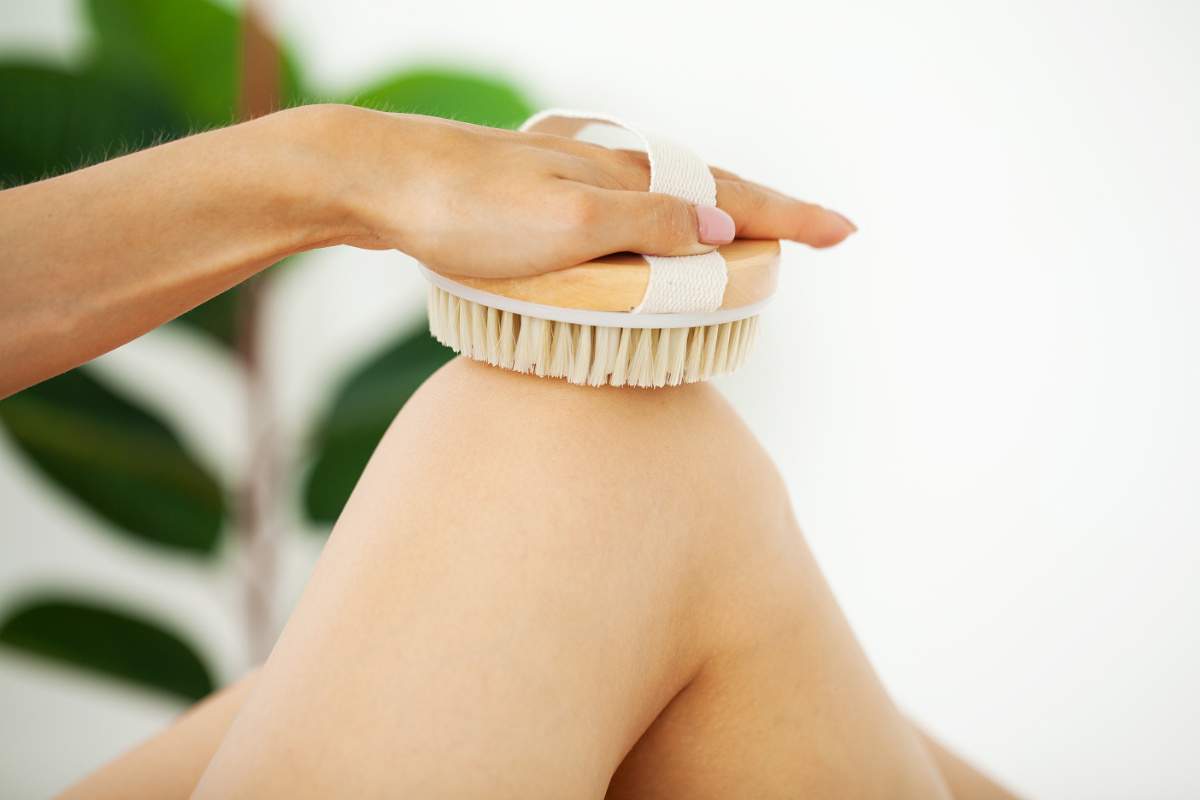
While it won’t flush deep toxins, the stiff bristles remove dead skin cells and create a “flush” of blood to the skin’s surface (vasodilation). This creates a temporary feeling of firmness and energy.
Action Step:
Use a natural bristle brush on dry skin before your shower. Use long, sweeping strokes starting at your feet and moving upward toward your heart. Do this 2–3 times a week, not every day.
Reason Why:
The friction excites your nervous system and increases local blood flow (hyperemia), which feels invigorating and can improve skin texture, even if the “detox” claims are exaggerated.
FAQ?
What is the best time to dry brush?
Right before a shower is ideal. The friction lifts dead skin cells, which you can then rinse away immediately. It also wakes you up, making it a better morning habit than a bedtime one.
Can dry brushing remove cellulite permanently?
No. It may temporarily “plump” the skin due to increased blood flow and swelling (inflammation), which masks the dimples for a few hours. However, it does not burn fat or restructure the connective tissue that causes cellulite.
Is manual lymphatic drainage better than brushing?
Yes. Manual Lymphatic Drainage (MLD) is a specific, light-touch massage technique proven to stretch the skin in a way that actually opens the initial lymph vessels. Brushing is often too scratchy or superficial to achieve this precise mechanical effect.
Does sweating in a sauna detox the lymph?
Indirectly. Sweating excretes mostly water and salt, not “lymph toxins.” However, the heat increases your heart rate and circulation, which can help move fluid faster overall. It works best when paired with cold plunges or movement.
How do I know if my lymph is stagnant?
You might notice puffiness in your ankles or face, low energy, or stiffness in the morning. If your rings feel tight or your socks leave deep marks, your fluid isn’t circulating efficiently.
Does drinking water help lymphatic drainage?
Yes. Lymph is mostly water. If you are dehydrated, your lymph becomes thick and sludge-like, making it harder to pump. Staying hydrated keeps the fluid thin and easy to move.
The Science Explained
The lymphatic system is a “one-way street” that relies on extrinsic forces (outside pressure) to move fluid against gravity. Research in Exercise Physiology confirms that the skeletal muscle pump accounts for about one-third of lymph transport in the legs during rest, and much more during activity. Additionally, the arterial pulsation from nearby arteries can push lymph along. This is why “passive” tools like brushes are far less effective than “active” tools like walking or deep breathing.
- Movement is King: Your muscles are the pump. No movement = no drainage.
- Breath is Key: Deep breathing creates the vacuum needed to clear the main drain.
- Brushing is Optional: It’s a great skin exfoliant, but not a medical detox tool.
- Gravity Matters: Elevating your legs helps, but active pumping works better.
Your Custom Action Plan
Put down the brush and stand up. Do 20 calf raises right now where you are standing. Feel your calves burn? That is your lymphatic system turning on. Do this 3 times a day to keep fluid moving.