

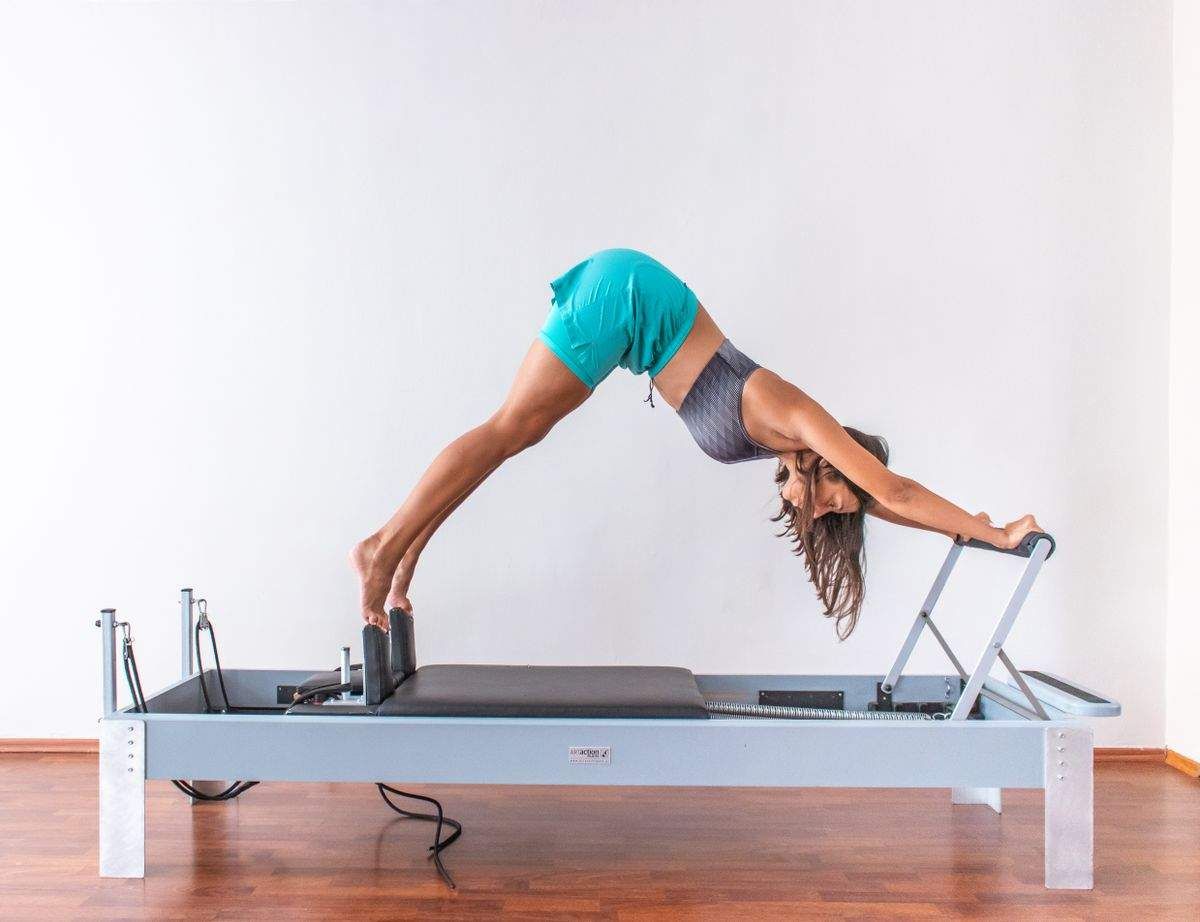
Explore how Pilates principles can help personal trainers develop more balanced strength programs while keeping clients’ training goals in focus.
Lifting heavier weights is often seen as a sign of progress in strength training. Increasing resistance can help build muscular strength, but it isn’t the only measure of effective training. How well someone performs an exercise, particularly when maintaining control throughout each repetition, is just as important.
These aspects are central to Pilates, which focuses on movement awareness, breathing and precision, offering a different perspective on how the body works against resistance. This blog post explores how personal trainers can incorporate Pilates principles into their strength programs without losing sight of conventional strength training goals.
Pilates and Strength Training
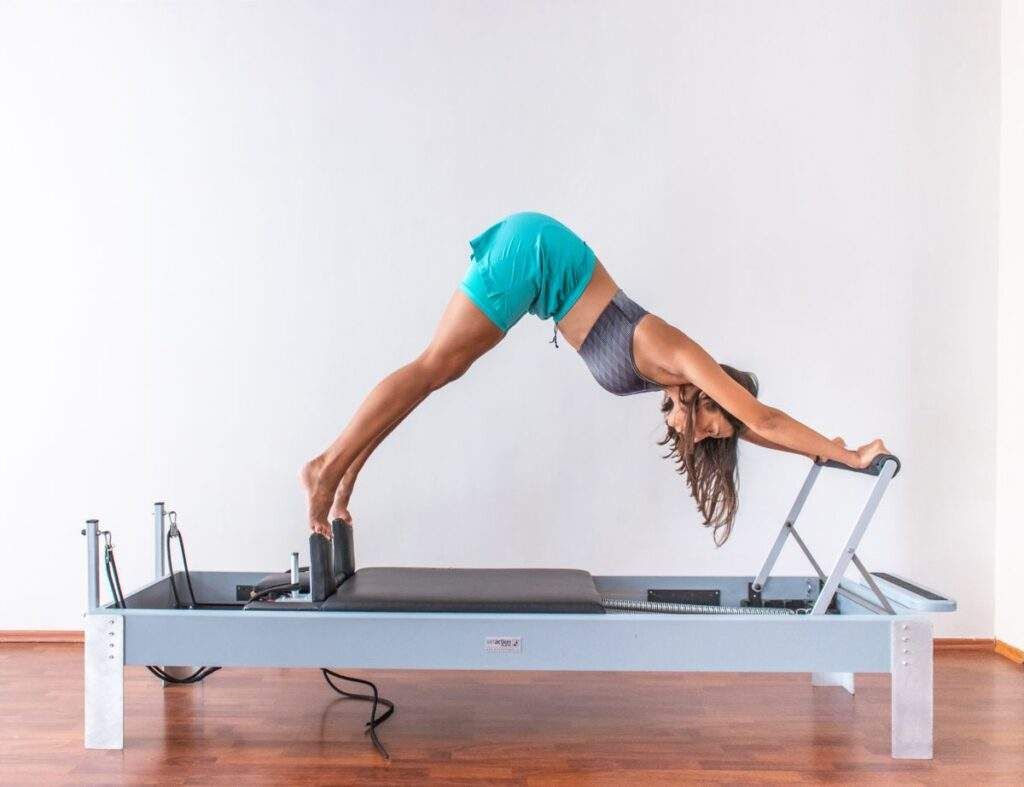
While Pilates and traditional strength training both use resistance to challenge the muscles, their approaches differ. When training in a gym, resistance is typically provided by free weights or machines, with the load gradually increased over time. In Pilates, it comes from springs, body weight and the demands of balance, and it is often increased by changing the position or complexity of an exercise. Despite these differences, both methods can apply progressive overload to encourage muscular adaptation.
The training objectives also influence how each method is used. Traditional resistance training is particularly suited to developing maximal strength and muscle size, as external loads can be adjusted to provide a specific training stimulus. Pilates, on the other hand, places greater emphasis on controlled movement and trunk strength, while also challenging muscular endurance and supporting broader fitness goals related to body composition and muscle development.
Research also offers some insight into the wider fitness benefits of Pilates. A 2026 systematic review examining Pilates in adult women found improvements in flexibility, body weight and BMI (body mass index), although it reported no significant pooled effects on lean body mass or certain strength-related outcomes. Similarly, a 2022 systematic review examining Pilates and strength outcomes in healthy adults found very low to low certainty evidence of similar strength results compared with other exercise methods.
While these findings suggest that Pilates can support aspects of physical fitness, they do not show that it produces greater strength gains than conventional resistance training. For personal trainers, the distinction is important when deciding how to combine the two methods. Pilates can complement a strength program by introducing different movement challenges, but clients working towards greater maximal strength or muscle development still need appropriately structured resistance training.
Key Pilates Principles for Strength Training
Pilates is built around six core principles: concentration, control, centring, precision, breathing and flow. Together, they encourage greater attention to how movements are performed rather than simply completing the required repetitions. Several of these principles can be applied directly to strength training. Control, for example, can involve slowing down the lowering phase of a squat, while precision comes into play when establishing the starting position for a deadlift.
Concentration also helps clients remain attentive to their technique, particularly when learning unfamiliar exercises. Breathing may also require a slightly different approach depending on the exercise. Rhythmic breathing may suit lighter resistance work, while heavier lifts often require deliberate bracing to support trunk stability. However, not every principle needs to be included in every exercise. Trainers should instead select those that are most appropriate for the movement and their clients’ individual needs.
Improving Movement and Exercise Technique
Pilates encourages greater awareness of how the body moves, giving personal trainers another approach to exercise instruction. By focusing on positioning and movement control, trainers can help clients better understand what an exercise involves and where adjustments may be needed. These principles can be applied to familiar strength exercises such as lunges and presses, where positioning can influence how a movement is performed.
Slowing down an exercise can also help clients become more familiar with its movement pattern. For instance, during a push-up, a controlled lowering phase allows the trainer to assess how well the client maintains their position throughout the movement. This approach can be particularly useful when introducing unfamiliar exercises or improving an existing technique before progressing to heavier resistance.
It’s also important to recognise that exercise technique will vary between individuals. A client’s physical proportions and available range of motion can influence how they perform a squat or deadlift. Pilates-inspired movement work can help trainers account for these differences and make suitable adjustments rather than expecting every client to follow an identical movement pattern.
Using Pilates in Strength Programs
Pilates-inspired exercises can be introduced into warm-ups to prepare clients for the demands of the session while allowing them to practise movement control. Rather than following a fixed routine, trainers can select exercises that complement the focus of the workout. For instance, glute bridges may be useful before squats and lunges, while controlled hip hinge practice can help prepare clients for deadlifts.
The exercise order also becomes particularly important during sessions focused on maximal strength. Trainers can instead include lighter movements in the warm-up or schedule additional Pilates work after the main lifts or on a separate training day. The key is to make Pilates-inspired exercises serve a clear purpose within the program.
How Clients and Personal Trainers Can Benefit from Pilates-Inspired Strength Training
Pilates-inspired movement work can give personal trainers another way to coach clients who find particular strength exercises challenging. For beginners, controlled variations may help develop familiarity with movement patterns before progressing to more demanding exercises. For experienced lifters, these variations can provide an alternative way to practise positioning and coordination when needed. Trainers can assess their usefulness by observing changes in technique and movement confidence during the main strength exercises. Strength performance should also be monitored, particularly when increasing lifting capacity is the main objective.
Looking at both aspects gives trainers a better understanding of how the program is working. For personal trainers interested in expanding their skills beyond conventional gym-based training, developing knowledge of Reformer Pilates can open up additional opportunities. A Dynamic Reformer Qualification is one pathway worth exploring for those looking to incorporate Reformer-based training into their professional practice. By understanding the strengths of both approaches, trainers can use Pilates-inspired exercises strategically to complement each client’s strength goals.
Final Thoughts
Integrating Pilates principles into strength programming doesn’t mean changing everything about the way personal trainers work. Sometimes, it simply means paying closer attention to how an exercise is taught, allowing more time to practise a movement or introducing a different approach when a client needs it. These principles can complement conventional resistance training, giving trainers another tool to adapt sessions to individual needs. Ultimately, the aim is to make each part of the program serve a purpose, with Pilates contributing where appropriate and progressive strength training remaining central to clients’ long-term goals.