

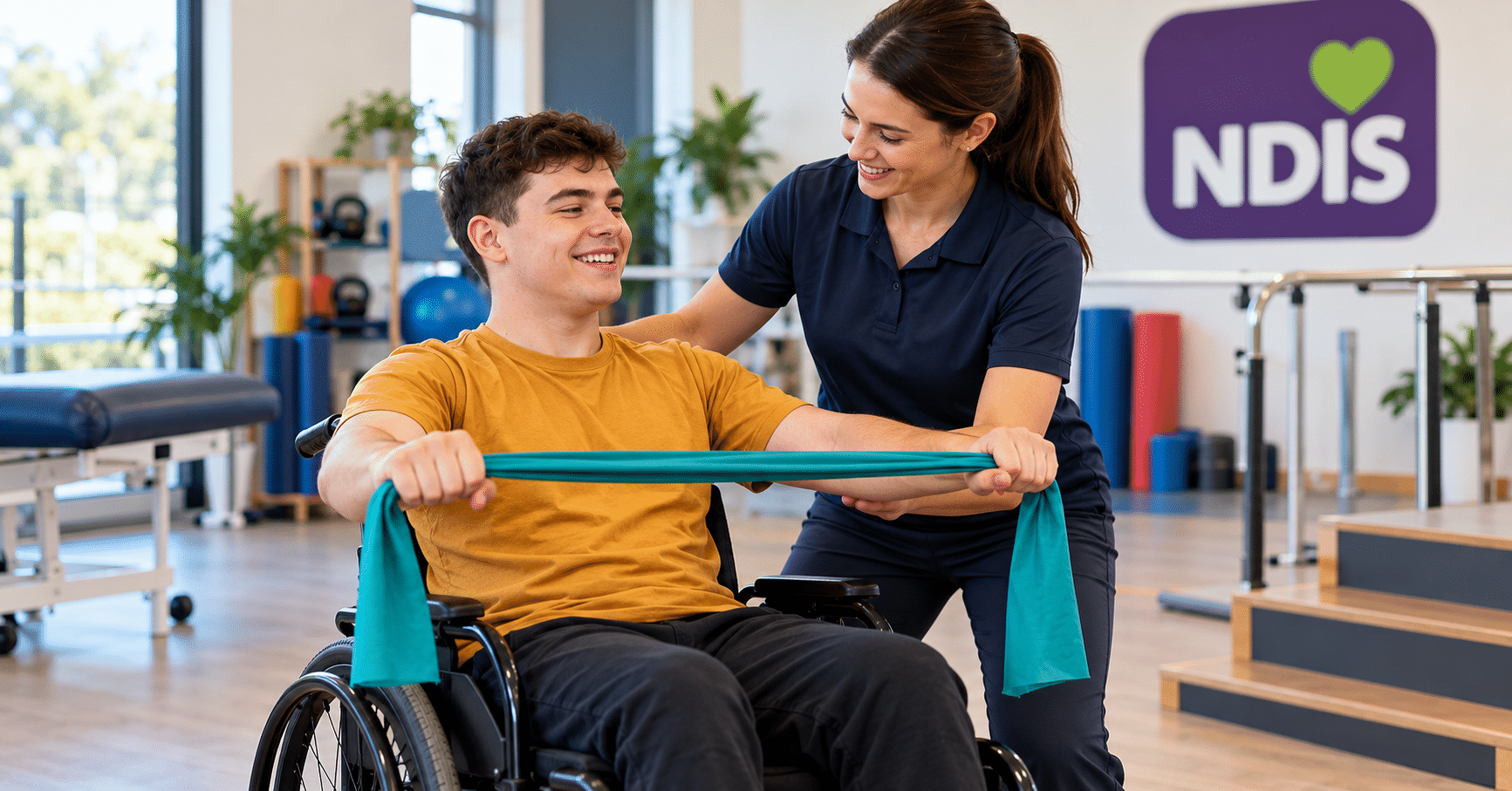
Living with a disability can affect movement, strength, balance, mobility, and the ability to complete everyday activities independently. For many NDIS participants, physiotherapy can play an important role in maintaining physical function, developing new abilities, and working toward meaningful personal goals. Rather than focusing only on short-term symptom relief, NDIS physiotherapy often takes a broader approach that considers what a person wants to achieve in daily life.
Every participant has different needs. One person may want to improve their ability to walk safely around the community, while another may want to develop the strength required to transfer independently, participate in recreational activities, or manage physical challenges associated with a long-term condition. This is why effective physiotherapy should be individualized, progressive, and connected to practical outcomes.
What Is NDIS Physiotherapy?
NDIS physiotherapy refers to physiotherapy services provided to eligible National Disability Insurance Scheme participants when the support relates to the person's disability, meets NDIS funding criteria, and is funded in their plan. Participants should check their plan before arranging services. The NDIS explains its requirements in its therapy supports guidance.
Physiotherapists work with movement and physical function. Depending on the participant's individual circumstances, treatment may address mobility, strength, coordination, balance, posture, physical capacity, and the ability to perform functional tasks.
The goal is not simply to complete exercises during an appointment. Physiotherapy may help people develop physical skills that can make everyday activities more manageable and support greater participation at home and in the community.
For people seeking NDIS Physiotherapy, a personalized assessment can help identify current physical abilities, functional challenges, and realistic areas for improvement before an appropriate rehabilitation program is developed.
How Physiotherapy Can Support NDIS Participants
Physiotherapy can serve different purposes depending on the participant's disability, current abilities, lifestyle, and personal goals.
Improving Mobility
Mobility means more than simply being able to walk.
It can include moving around the home, getting in and out of a chair, changing positions, using stairs, navigating community environments, or using mobility equipment effectively.
A physiotherapist may assess how someone currently moves and identify areas where strength, balance, coordination, or movement efficiency could potentially be improved.
The rehabilitation plan might then include specific exercises and functional practice designed around those needs.
Developing Strength
Strength affects many everyday activities.
Standing from a chair, carrying items, maintaining posture, walking longer distances, and transferring between surfaces all require different levels of muscular strength.
For some NDIS participants, progressive strengthening can form an important part of physiotherapy.
Exercises do not necessarily need to involve heavy gym equipment. Depending on the individual, rehabilitation may include bodyweight movements, resistance bands, supported exercises, light resistance, or functional tasks.
What matters is that the exercises are appropriate for the participant's current ability and progressed carefully over time.
Supporting Balance and Coordination
Balance difficulties can make everyday movement more challenging and may reduce confidence.
Physiotherapy may include exercises designed to improve balance, body awareness, coordination, and movement control.
These exercises might initially be performed with additional support before gradually becoming more challenging as the participant develops confidence and physical capacity.
The objective is not to make exercises unnecessarily difficult. It is to create an appropriate level of challenge that encourages improvement while maintaining safety.
Physiotherapy Should Be Goal-Oriented
One of the most valuable aspects of NDIS physiotherapy is the opportunity to connect rehabilitation with meaningful personal goals.
Instead of focusing entirely on clinical measurements, physiotherapists can consider what improved physical function would allow the participant to do.
For example, a person may want to:
- Move more independently around the home
- Improve their walking tolerance
- Participate in community activities
- Develop better balance
- Improve strength for transfers
- Return to a recreational activity
- Increase confidence with physical movement
- Maintain existing physical abilities
- Reduce the physical effort required for everyday tasks
These goals can provide direction for treatment.
Functional Goals Can Make Exercise More Meaningful
Exercise is often easier to understand when participants know why they are doing it.
A repeated sit-to-stand exercise, for example, may not seem particularly meaningful by itself. However, if the participant understands that it is designed to develop the strength needed to stand from a chair with less assistance, the exercise becomes connected to a practical outcome.
Similarly, balance exercises may support greater confidence when walking outside, while strengthening exercises may help someone complete household activities more independently.
Connecting exercise with real-world goals can make rehabilitation more purposeful.
The Relationship Between Physiotherapy and Exercise
Exercise is commonly associated with fitness, but it is also used in rehabilitation.
The type, intensity, and purpose of therapeutic exercise can differ significantly from a general gym program.
A physiotherapist may prescribe exercises based on a detailed assessment of the participant's movement, physical capacity, symptoms, and functional needs.
Exercise may focus on areas such as:
- Strength
- Mobility
- Flexibility
- Balance
- Coordination
- Endurance
- Movement control
- Functional ability
As a participant progresses, the exercise program may also change.
Fitness Network Australia discusses similar disability-focused movement strategies through its information on NDIS exercise physiology, including individualized exercise approaches designed around health conditions, mobility, strength, balance, and functional capacity.
Why Progression Matters in Rehabilitation
Physical improvement generally requires an appropriate level of challenge.
If an exercise becomes very easy and never changes, it may no longer provide enough stimulus for continued adaptation. On the other hand, increasing difficulty too quickly can make a program difficult to manage.
Progression should therefore be gradual.
A physiotherapist might progress an exercise by changing:
- The number of repetitions
- The resistance used
- The movement range
- The amount of support provided
- The duration of an activity
- The complexity of the task
- The environment where the activity is performed
For example, balance training may begin with a stable position and appropriate support. As ability improves, the participant may gradually practice more challenging positions or movements.
The progression should always reflect the individual rather than following a fixed schedule.
Rehabilitation Can Extend Beyond the Clinic
An important part of physiotherapy is helping participants use their physical abilities outside treatment sessions.
Being able to complete an exercise in a clinic is useful, but the larger goal may be using those improvements during everyday life.
A physiotherapist may therefore incorporate tasks that resemble activities performed at home or in the community.
Home Exercise Programs
Participants may also receive exercises to complete between appointments.
A home program does not need to be extremely long or complicated. In many situations, a small number of well-selected exercises performed consistently can be more manageable than an extensive routine.
Clear instructions are important.
Participants and their support networks should understand how the exercises are performed, how frequently they should be completed, and when modifications may be required.
Building Confidence Through Movement
Physical ability and confidence are often closely connected.
When movement becomes difficult, some people naturally become more cautious. They may avoid activities because they are worried about falling, experiencing discomfort, becoming fatigued, or being unable to complete the task.
Gradual rehabilitation can help rebuild confidence.
This might involve practicing a task in a controlled environment before gradually introducing situations that are more similar to everyday life.
Small improvements can be meaningful.
Walking slightly farther, standing with less assistance, maintaining balance for longer, or completing a transfer more comfortably may all represent important progress depending on the participant's starting point.
The Importance of Individualized Care
There is no single physiotherapy program that works for every NDIS participant.
Even people with the same diagnosis may have very different physical abilities, challenges, lifestyles, support networks, and goals.
Several factors can influence rehabilitation, including:
- Current mobility
- Muscle strength
- Fatigue
- Balance
- Previous injuries
- Communication needs
- Home environment
- Mobility aids
- Support availability
- Personal preferences
- Long-term goals
An individualized approach allows these factors to be considered when planning treatment.
It also allows the program to change as the participant progresses.
Working With Other Health and Support Professionals
NDIS participants may receive support from several professionals.
Depending on individual needs, this may include physiotherapists, occupational therapists, exercise physiologists, doctors, support workers, speech pathologists, psychologists, and other healthcare professionals.
Collaboration can sometimes help ensure that different services support compatible goals.
For example, a physiotherapist might focus on physical capacity and mobility, while an occupational therapist may consider how the participant performs everyday activities within their environment.
Exercise physiologists may also contribute to longer-term exercise participation and physical conditioning when appropriate.
The exact combination of services will depend on the participant's circumstances and NDIS plan.
Measuring Progress in NDIS Physiotherapy
Progress should not always be measured by dramatic changes.
For some people, meaningful improvement may involve maintaining current abilities and reducing the risk of physical decline.
For others, progress might include greater walking distance, improved balance, increased strength, or reduced assistance during everyday tasks.
Physiotherapists may use functional assessments and other measures to track changes over time.
However, participant-reported improvements are also important.
Questions such as these can provide valuable information:
Is an Everyday Task Becoming Easier?
Being able to complete a daily activity with less effort can represent significant functional progress.
Is Confidence Improving?
A participant may become more willing to attempt activities that previously felt difficult or intimidating.
Is Less Assistance Required?
Even a small reduction in the amount of physical assistance required for a task can contribute to greater independence.
Can the Participant Do More?
Increasing walking distance, completing additional repetitions, standing for longer, or participating more actively in community activities can all indicate improvement.
Consistency Often Matters More Than Intensity
Rehabilitation does not always require intense exercise.
Consistent, appropriate activity is often more valuable than occasional sessions that are extremely demanding.
Programs should be realistic enough to fit into the participant's routine.
This can be particularly important when fatigue, transportation, support availability, or other health considerations affect participation.
A manageable program makes it easier to build exercise into everyday life.
Over time, small and consistent efforts can contribute to meaningful improvements in physical function.
Choosing an NDIS Physiotherapy Provider
When selecting a physiotherapy service, participants and their families may want to consider more than location alone.
Useful questions can include:
- Does the physiotherapist have experience working with disability-related needs?
- Will treatment be based on individual goals?
- Are exercises explained clearly?
- Can the program be adapted as abilities change?
- Is progress reviewed regularly?
- Does the provider communicate effectively with the participant and relevant support network?
- Can rehabilitation be connected to real-life activities?
Good communication is especially important.
Participants should feel comfortable asking why a particular exercise is being recommended and how it relates to their goals.
Creating Long-Term Physical Capacity
Physiotherapy is often most valuable when it helps build skills that extend beyond individual appointments.
The long-term objective may include greater independence, improved confidence, maintained mobility, increased participation, or simply having more physical capacity to manage everyday life.
Progress can take time, particularly when someone is managing a long-term or complex disability.
That does not mean rehabilitation is unsuccessful.
Meaningful outcomes often come from gradual changes that accumulate over weeks and months.
Final Thoughts
NDIS physiotherapy can provide structured support for participants who want to improve or maintain mobility, strength, balance, physical function, and independence.
The most effective approach is rarely based on a standard exercise routine. It should begin with understanding the individual: their abilities, challenges, environment, preferences, and goals.
From there, physiotherapy can use appropriate assessment, therapeutic exercise, functional practice, education, and gradual progression to help participants work toward outcomes that matter in everyday life.
Whether the goal is moving more confidently around the home, participating in community activities, improving physical capacity, or maintaining existing function, meaningful rehabilitation is built around the person rather than the diagnosis.
With realistic goals, consistent participation, and an appropriately individualized program, physiotherapy can become an important part of helping NDIS participants move toward greater confidence and independence.